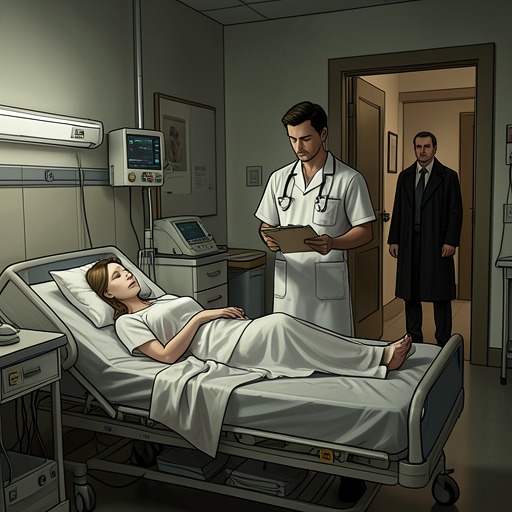
Maribel
Dr. DeathMaribel is a motel cleaning worker whose discovery of Joanne Doss’s body places her at the edge of a death investigation. Her night shift, the severe personal strain she was enduring, and her hesitant account make her more than a background witness: after she finally speaks to Alex Delaware, the narrator registers a sudden change in his understanding of the case.
Work and Circumstances
Maribel worked overnight at the motel, starting at eleven in the evening and finishing at seven in the morning. She had asked for night work because she also held a daytime job at a Best Western in Palmdale. The schedule points to a life organized around two jobs, with little room for rest; the account does not give her age or a fuller history, but presents her as someone working under considerable physical and economic pressure.
When Alex Delaware encounters her, she is short and frail-looking, dressed in a pink-and-white uniform that seems unusually proper beside the motel’s pitted parking lot and splintering red doors. Her hair is tied back, though sweat has stuck loose strands to her forehead, and she wears gloves pulled up to her elbows. The wheeled cart beside Unit Six is piled with cleaning solvents and frayed towels; a trash bag overflows with soiled linens and empty bottles. These details locate her in the practical aftermath of the death: she is on shift, equipped to clean, and moving through the same work space where the investigation must recover what happened.
The Discovery and Its Cost
Maribel found Joanne Doss after Joanne died by suicide in a motel room. The discovery affected her acutely. When the police first questioned her, she was pregnant and close to giving birth, and had already suffered a miscarriage. The person recounting that first interview remembered her as so sick and distressed that she could not stop crying after finding the body. Her condition was not incidental to the interview: she was being asked to describe a death while facing serious physical vulnerability of her own.
The initial police conversation yielded little. By the time Alex arrives, he is told that the officers have already spoken with Maribel but that she had not said much. Her brief account of the circumstances includes the presence of another person connected with a car that was gone by morning; when asked who that person was, she says she did not get a good look. The limited identification leaves a gap rather than supplying a clear description, and the investigation must distinguish what she actually observed from what can only be inferred.
Interview and Narrative Turning Point
At the motel, Maribel gives the badge more attention than her employer had. Alex identifies himself and explains that he has come to ask about Joanne Doss. As the questioning turns to what Maribel saw, she pulls at one glove and falls silent. The pause makes her reluctance visible without explaining it; the account does not specify whether fear, exhaustion, grief, or some other cause holds her back.
She eventually speaks. The narration immediately marks the effect on Alex: suddenly, everything makes sense. The scene thus makes her disclosure a decisive hinge in the inquiry, even though the available account does not state its exact content. Maribel’s importance lies partly in that contrast: she has seemed unable or unwilling to offer much, but her eventual words change the investigator’s grasp of the events. The text leaves the precise revelation unstated here, preserving the moment as a turn in understanding rather than licensing a more specific claim about what she told him.